
by Rich H
The City is moving rapidly towards finalizing an economic development deal that raises financial and political warning signs—it potentially gives away millions of our tax dollars to an Abbott and Cruz crony, who is also a major Texas donor to AIPAC and one of the authors of the scurrilous Texas Holocaust, Genocide, and Antisemitism Advisory Commission’s 2024 Study on Antisemitism in Texas, which perpetuates Abbott’s lies about the Anti-Gaza-War protests at UT.
The Deal
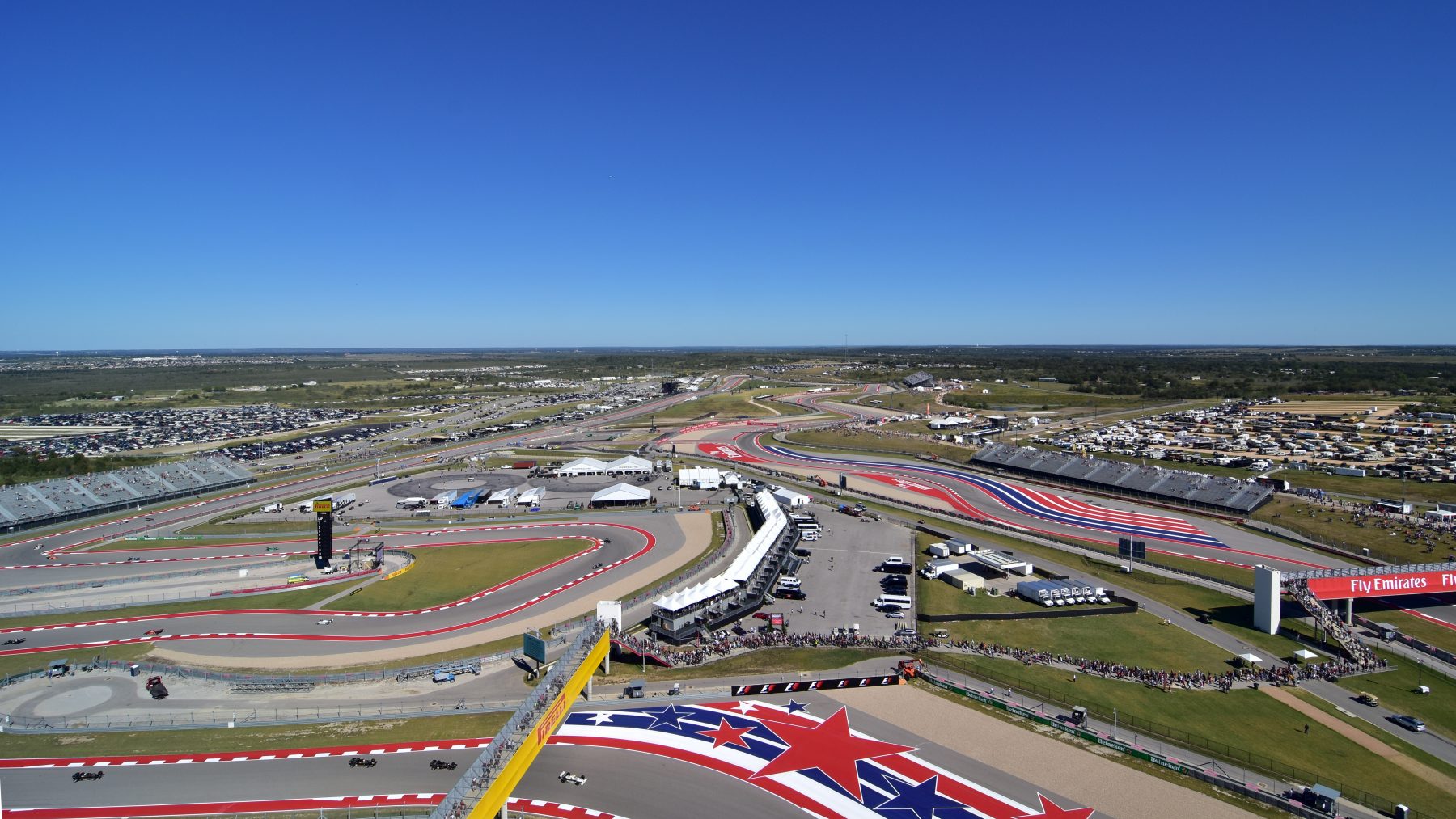
The deal (described in Item 6 on the April 23 Council agenda) is with RIDA Development, a Houston-based company that builds resort-style hotels, mainly in Florida. The proposed tourist-oriented project here in Austin is for a mid-sized convention center and hotel adjacent to the COTA facility that will be a “self-contained” “destination hotel and conference resort” (see news stories here and here for more details). The agreement with the City of Austin will rebate millions of dollars in Hotel Occupancy Taxes (HOT) back to RIDA for 30 years, in exchange for certain public benefits, the most significant of which is that the developer claims the project will result in 900 permanent hospitality jobs, at an average annual wage of $61,000. However, details about the specific performance benchmarks RIDA needs to hit to receive the tax rebate are sketchy.
The deal also includes public parkland, $1.5 million into the Affordable Housing Trust Fund, and a labor peace deal with Unite Here Local 23. The City also touts projected property tax revenue from the project as a benefit.
The deal, which was unanimously advanced by the City Council at its April 23rd meeting, has been celebrated by several city council members especially because of the labor agreement. This aspect is obviously great for the labor movement, but there are other serious concerns that may outweigh it.
In general, economic development deals do not benefit the public in ways politicians claim; instead, they tend to have negative impacts on local communities, especially for the working class. Research on economic development deals that use tax breaks allegedly to attract businesses and investment to cities has shown two important points: First, in the vast majority of cases, companies make decisions about where to locate operations independently of tax breaks—in other words, these tax breaks are just corporate tribute and make no difference to whether a project happens or not. Second, cities usually do not benefit financially from these kinds of deals—these deals end up costing the public more than they bring in.
An example of this research is the book, Incentives to Pander, co-authored by UT-Austin Government Professor Nathan Jensen, summarized as follows on the publisher’s website (see also this excellent two-minute video summary):
“Politicians … use these policies to claim credit for attracting investment… This book … shows how such pandering appears to be associated with growing economic inequality. As national and subnational governments surrender valuable tax revenue to attract businesses in the vain hope of long-term economic growth, they are left with fiscal shortfalls that have been filled through regressive sales taxes, police fines and penalties, and cuts to public education.”
Beyond these general problems with economic development deals, this particular one is especially suspect because of who the developer is and because of the financial implications of the deal.
Issues with RIDA’s Ira Mitzner
RIDA was founded by David Mitzner, the father of current CEO Ira Mitzner. It is a privately owned and family-run multibillion dollar company based in Houston. Billionaire Ira Mitzner is a big-money donor to Republicans in Texas and Florida, including to DeSantis’ super PAC and to Ted Cruz. He was the chair of the committee that brought the 2024 RNC to Houston, which resulted in Trump’s second term. Mitzner is also an important pro-Zionist voice in Texas, a big donor to AIPAC, and 2019 AIPAC Gala Chair.
Additionally, he was appointed to the Texas Holocaust, Genocide, and Antisemitism Advisory Commission (THGAAC) by Abbott. The THGAAC’s 2024 Study on Antisemitism in Texas was partly responsible for the atrocious (and likely unconstitutional) slew of bills passed last year by the Texas Legislature that enshrined in Texas law and education code the International Holocaust Remembrance Alliance’s (IHRA) definition of anti-Semitism, which equates anti-Zionism with anti-Semitism (see page 9 of the report). (Incidentally, those bills passed with the support of most Democrats in the Legislature, including locals Hinajosa, Talarico, Cole, Flores, and Bucy.) Another recommendation of the THGAAC is an anti-masking law.
The Study on Antisemitism in Texas repeats false claims that the Anti-Gaza-War protests were anti-Semitic, and it justifies the police crackdown on protesters: “Tensions at UT Austin reached a crescendo at anti-Israel protests in April 2024 that required intervention by state troopers and campus police” (page 7, my emphasis). The report also calls out activists who went to city councils to demand a ceasefire resolution, falsely calling them anti-Semitic: “At public hearings in many cities, anti-Israel activists have regularly gone beyond their free speech rights to bully and intimidate elected officials and Jewish community members, using antisemitic language and sometimes being forcibly removed by police” (page 7). Additionally, the report praises Texas’s “lead” on anti-BDS legislation and Abbott’s pro-Israel statements and actions (pages 10-11). Mitzner is, in part, responsible for this report.
Do Austinites want our city to be entering into deals with people like Ira Mitzner, especially given the irregular, fast-track process the Council has used, and the unanswered financial questions about the deal that remain?
Irregular Process & Unanswered Financial Questions
In addition to the unsavory connections of Mitzner, this development deal also raises serious financial and process questions.
At the April 23rd meeting, Council passed an ordinance that “waives the staff presentation, public announcement and portal setup, and public hearing requirements” normally required for economic development deals. This prevents public scrutiny of the deal, which is especially problematic because “the structure of the agreement and its long-term cost to the city remain unclear, however, with key financial projections and final terms still under negotiation and not yet publicly released” (see this news article). We do not know what is actually in this deal, yet Council is fast-tracking it. Among the things that we do not know is the projected amount of the tax rebates—we don’t know how much this will cost us.
Typically, convention center and hotel development deals are sold to the public because they have “economic spillovers”: convention-goers typically spend money locally in restaurants and bars, retail stores, other local attractions, etc.—the argument goes—thus, supporting local businesses and jobs1. Some of that rhetoric is in the staff presentation, but this project is specifically described as a “self-contained” (page 3) “destination hotel and conference resort” (page 2), located far from other local businesses at the COTA facility. This means that attendees of future events at the RIDA development are unlikely to spend much money outside the “resort” itself or in local businesses, severely limiting any “economic spillover.” The City’s claims about the “economic impact” of this project are disingenuous.
The deal does include public parkland, $1.5 million into the Affordable Housing Trust Fund, in addition to the peace agreement with Unite Here. These are all great benefits, but the city cannot tell us at what cost to the public. How much are we spending from HOT funds to get parkland and $1.5 million in the Trust Fund? We are not told.
However, we can make some calculations based on assumptions that we do know:
- The deal will rebate 8.5% of gross room revenue from the hotel for 30 years.
- The hotel is planned to have 1,000 rooms.
- Standard rooms at one of RIDA’s comparable developments, the Omni Orlando Resort, are around $250 per night.
- The average annual hotel occupancy rate in Austin is somewhere around 65%.
These are conservative numbers, so we can conservatively approximate the amount of HOT tax to be rebated to RIDA as:
8.5% x 1,000 rooms X 65% occupancy X $250/night X 365 nights X 30 years
=
~$150,000,000
That is $5 million per year for 30 years, with the main public benefit being 900 jobs. That’s about $5,500 of public money per job per year, which means that the public is effectively covering approximately 10% of RIDA’s payroll for 30 years, guaranteeing Ira Mitzner larger profits, subsidized by Austinites.
This is what economic development looks like in Austin.
The item should be coming back to the council in next few month, so keep your eyes out for it to appear on an upcoming agenda—and be ready to write, call, and testify against this bad deal.
1It’s important to remember that most jobs in hospitality and food service are low-paying jobs. For example, of the job categories that the US Bureau of Labor Statistics uses, in Austin food service pays the lowest, at $31,200 on average, which is under 60% of the median wage for our area. Tourism-related economic activity tends to rely on a low-paid workforce; economic development deals do nothing to improve pay or working conditions in “spillover” jobs, yet those jobs are counted as part of the “public benefits” that we are paying for.