By Bridget T
First published on Substack here.
9-11-2025 was the 52nd anniversary of the Chilean coup. Twelve years before that, on the 40th anniversary, 9-11-2013, I walked into a room at the top of Anabel Taylor Hall on the Cornell University campus to take part in an interview that would alter my view of the world forever.
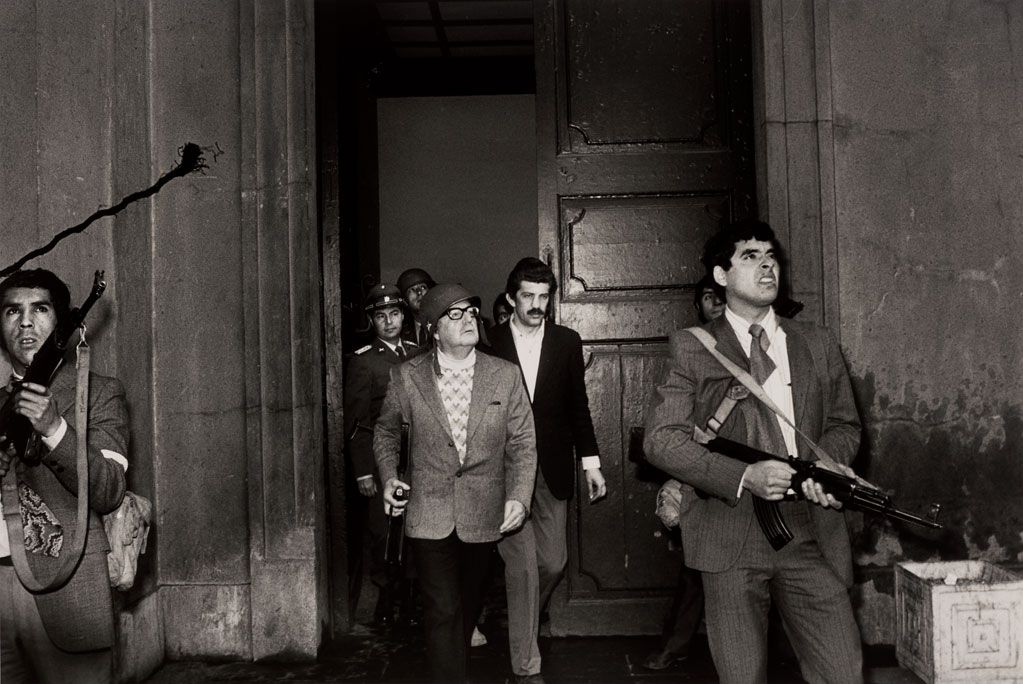
In the summer of 2013, I was a Politics student at Ithaca College ready to start an internship with CUSLAR (Committee on U.S. – Latin American Relations) in the fall. I volunteered first for the summer to help organize the CUSLAR Spanish Camp for Activists where we improved our Spanish and empowered each other with good food, music, and political speakers. It was there that I heard live Chilean music for the first time around the campfire. I would later find out it was played by a man named Carlos. This is the same Carlos that I would interview about his experience in leaving Chile after the coup and coming to the U.S. in exile some months later. Political refugees from Chile had come to Ithaca, New York since 1974. My work with CUSLAR that summer also involved researching the connections and ties between Ithaca based organizations, such as CUSLAR and the Friends of Chile, and the larger refugee community that had formed a network to get exiled and imprisoned people out of Chile. From this research, we decided to put together an oral history project in preparation for the 40th anniversary of the coup. I had the opportunity to hear the stories of those who were in Chile on the day of the coup and the years of President Allende and Unidad Popular’s administration.
Each story, or “testimonio,” gives a new perspective on the day itself, and on the years leading up to such a monumental event. Each person’s story represents a new layer of the coup and what it means in world history and in the history of the U.S. empire. Everyone I have ever talked to from Chile had an entirely different experience when their world came to a screeching halt on 9-11-73. I think this speaks to the human condition of course, but also, the truly diverse coalition that had been built around Allende and the thousands of workers who supported him.
One story unlike that of anyone else is the testimony from Ana Villa. Ana’s late father was an American diplomat working with the United Nations in Santiago at the time of the coup. Ana’s family was completely uprooted by the events of the 1973 coup. Ana had a unique viewpoint as a young person in Santiago, mingling with the international elite, but also coming of age with the people of Chile before and during the Allende government. I met Ana on 9-11-2013 when she walked into the CUSLAR office accompanied by her mother Fran Barraclough.
This is what she said:
Experiencing 9-11-73, Santiago, Chile
“I’m Annie. Ana Maria. I was born in Tennessee, but grew up mostly in Santiago, Chile. My dad, Solon Barraclough, worked with the United Nations with the FAO (Food and Agriculture Organization), but he also had connections at *ICIRA (The Institute for Land Reform in Chile). So we went to Chile in 1959 and he went down to work for the FAO. I went to Nido de Aguilas and Santiago College which are both international bilingual schools.
I was very political, and I disliked all of the rich kids I went to school with. The kids were pretty snobbish. I started becoming very political in 1970 after Allende won the presidential election, and I was a senior at Nido de Aguilas. If the coup hadn’t happened, I never would have graduated because I was never at school! I would go to school and then run away to go to the big marches, in the middle of tear gas and everything. From 1970 onward, every time there was a Unidad Popular march I was there. . . A lot of interesting things happened at the time because of my school being children of ambassadors and international people.
“They knew that the coup was supposed to be that Monday”
The week of the coup, I went to school on Monday, September 10th and none of the other Americans were there. I asked why there were all gone, and the teacher said they all took a vacation. They all went out on vacation at the same time! That was ridiculous. They knew that the coup was supposed to be that Monday. And they took off. So I thought something was funny that Monday and then on Tuesday, I did not go to school.
On September 11th, I was supposed to go to some offices downtown to turn in papers right by La Moneda and I overslept. I overslept that morning. Now I have to explain where our house was. It was up this long street on a hill. A larger house with more land. Right across from us was the military country club.
On the day of the coup d’etat, the military ran all of their messages up to the county club all day. Through the months before the coup there was a lot of abnormal activity and many more cars. On the day of the coup, my father happened to be in Israel and my mother was at a friend’s house. I remember waking up in a panic because I’d overslept. I called my neighbor to say “we’ve got to go” and she said “we’re not going anywhere.”
“My friend said, ‘No, this is real”’
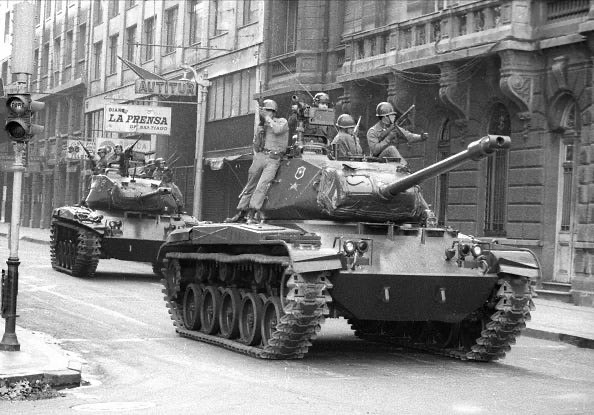
In June there had been a similar thing. The military had sent tanks up to La Moneda, attempting to do a coup or to scare people. This was called the Tanquetazo, so I said “ah it’s just another Tanquetazo. These sons of bitches don’t know what they’re doing.” But my friend said, “No, this is real.”
I got to hear Allende’s speech on the radio. I could look out and there must have been 20 soldiers with machine guns pointing at our house. They knew we were Gringanistas. I remember thinking “this is not good.” Behind our house were blackberry bushes, so I took my brother and went to the neighbor’s house and I called mother to tell her not to come home. Any car coming up the hill had to either be going to the country club or to our house so I said don’t even bother.
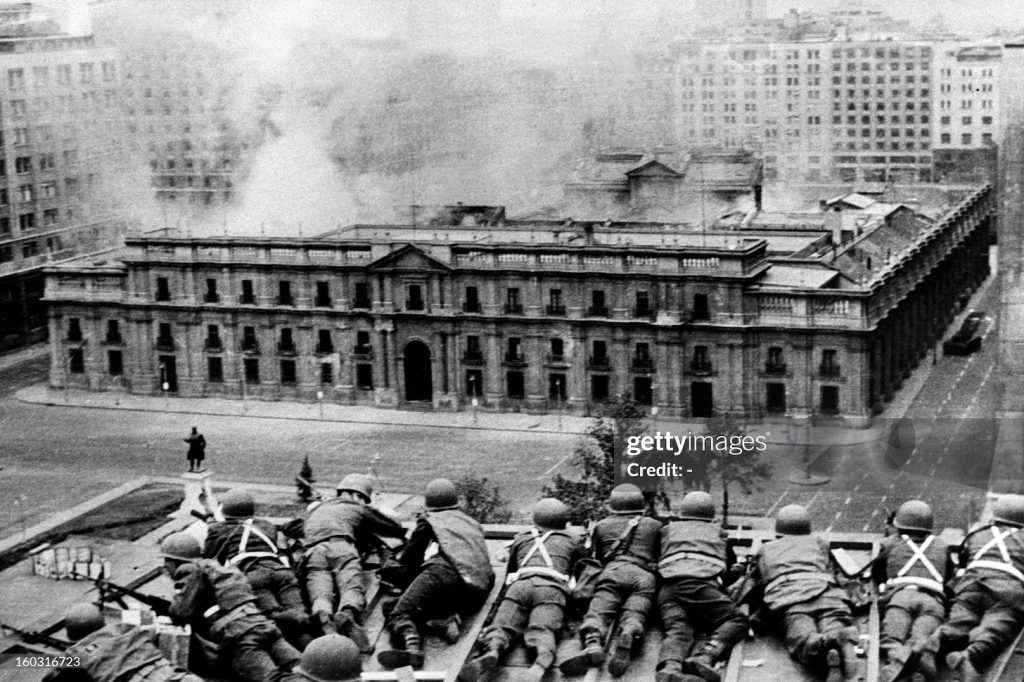
“We took off and left our house that day”
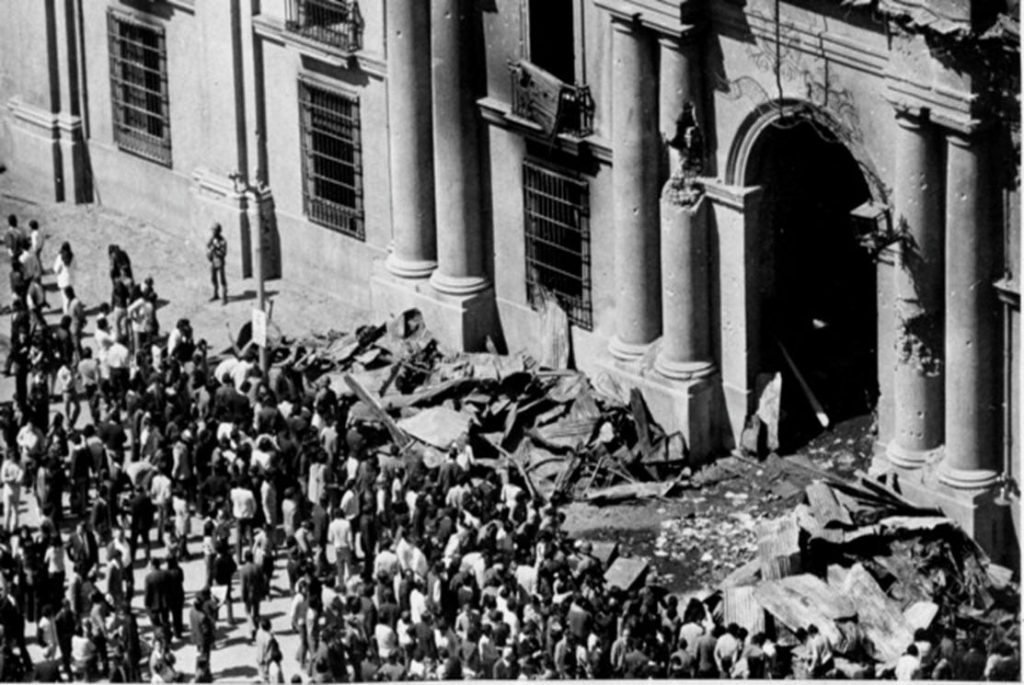
You could see the planes coming by- they were fighter jets. We took off and left our house that day. You could hear the shooting, the bombings, at one point you could see the smoke of La Moneda. I slept in the living room in our friends’ house, and you could hear the guns at night outside. That really stays with you.”
At the club, there were *cuidadores. I was friends with one of their daughters, and it was she who told me that they were looking for us. She told me that all the Barracloughs had to go to the police station and turn their names in. It wasn’t just us, of course. Pinochet and his command of people were going over lists of people who also needed to report in. But my friend knew where we were. So I thought, ‘wow, we’re really not very safe.’”
“I had names and books in my room that could get people in trouble”
Fran added, “She was the daughter of the sergeant” and Ana continued,
“Right. After that we weren’t allowed to leave the house for three days. We had a Volvo, and in Chile at the time, there weren’t that many Volvos. Also, we had diplomatic plates. So our car was very conspicuous and we didn’t dare go out in it. We wanted to put mud on the license plate and things, but after the third day I decided to just walk to our house because I had names and books in my room that could get people in trouble if the military got ahold of them.
This interview was a casual conversation between Ana, her mother Fran, the director of CUSLAR, Tim, and several students and interns, including myself. There were undergraduate CUSLAR interns from both Ithaca College and Cornell, and there were also graduate students, notably international students. It was common for some of the brightest Latin American scholars at Cornell to get involved in the events and campaigns of CUSLAR. Two of these students had grown up in Argentina, another country where U.S. imperialism reared its ugly head and sought to undermine the power of popular movements. During the 40th anniversary event, the Argentinian students asked many questions that brought our conversation to an even deeper level.
One crucial piece that makes Ana’s story unique is obviously her father’s job and the specific nature of his role within the United Nations. Solon Barraclough was an American from New Hampshire who later worked with the Food and Agriculture Organization in the United Nations. After studying economics at Harvard and gaining practical knowledge on his family’s farm, Barraclough became a forester and adviser. He began working with the FAO on Latin American agriculture projects through the end of the 1950s, and, as President Kennedy launched the Alliance for Progress program in 1961. Simultaneously, a global agrarian reform movement was growing.
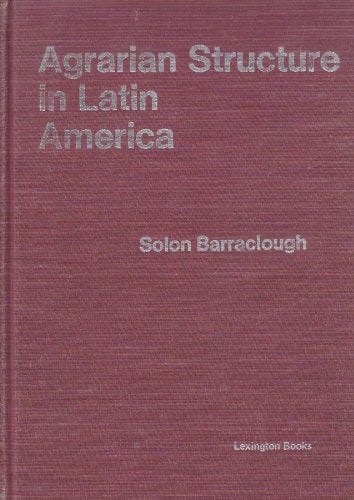
A 2002 obituary for Solon in the Guardian stated, “Barraclough was never happier than when out in the countryside talking to peasants.” One of the Argentinian students asked Ana, if her family or her father had any diplomatic protection. She responded:
“No! Even the U.N. was not protected. There were two pars to ICIRA, the national side and the U.N. side. And they found the national officials floating in Mapocho River two days after the coup. So no, there was no diplomatic protection. . .
“They can’t have a coup Monday because it’s foggy”
Fran: Some kid told her there was going to be a coup on Monday. And I said, “Oh the Chilean military won’t be able to do anything because it’s foggy. They can’t have a coup Monday because it’s foggy.” But it was the next day.
Ana: There was no protection really for Americans. For those who were right wing, or those in the CIA, or working with the embassy, there was protection, but my father was considered a persona non grata because he was doing land reform in Chile. Chile was made up of the very wealthy and the very poor, and those who were very wealthy were the landowners who had all these *latifundios. They weren’t using the land or were planting very little, exploiting their workers. So my father was taking that land and giving it to poor farmers, dividing it up for the workers and giving them something to live on.
I mean we were threatened all the time to the point where my mother said, “Move your bed away from the window.” They shot at my father’s car when he was out. When I finally left the house after the coup, I couldn’t drive our car because it was recognizable, so I walked.
I remember I walked through tenement housing that was built by the Christian Democrats, built in *Educardo Frei’s time. Frei built all these bricks houses for people.
“What the heck are they shooting at? This is a Christian Democrat neighborhood!”
I was walking and there were helicopters flying on both sides of the road, and they were just shooting. I was thinking, “what the heck are they shooting at? This is a Christian Democrat neighborhood!” It got so that they got so close to me that I had to hide under a tree. It was spring, like that would protect me from a bullet, but that’s how naive I was, that I’m running around hiding from guns under a tree. Luckily they went away.
The military broke into our house that night, on September 11. They said they were looking for weapons, but we had no weapons. They took our kitchen knives and said we had weapons.
Fran: We had shish kabob sticks- real weapons!
Ana: They stole all of our radios, our washing machine, anything that we had imported without paying taxes. I had books in my room with lots of names of my friends who were against the coup. I stupidly thought, “Well, I can’t put them in the fireplace because that smoke coming up the chimney will look suspicious.” So what did I do? I threw them all out the window and had a huge bonfire in the back of my house.
This was about the 13th or 14th, one of the first day we could go out. So what happens? I’m standing at my house, alone, with this huge bonfire and here comes a helicopter. The helicopter shows up, maybe 50 meters above me, circling me. I’m thinking “If I run, they’ll shoot. If I go in the house, and they follow me in there, then no one is going to know.” And I’m thinking “Ahhh,” so I just stood there. I’m not really looking at them, I’m thinking “How am I going to get out of this one?” And you know, I really was saved because all they did was circle maybe 30 times, and they just yelled obscenities, because there was a blonde girl, 18 years old with hair down to her waist. I thought they might not shoot but I might get killed or raped. I have to say, I just stood there, mostly because I was kind of frozen there scared. And they left me.
“It changed those people”
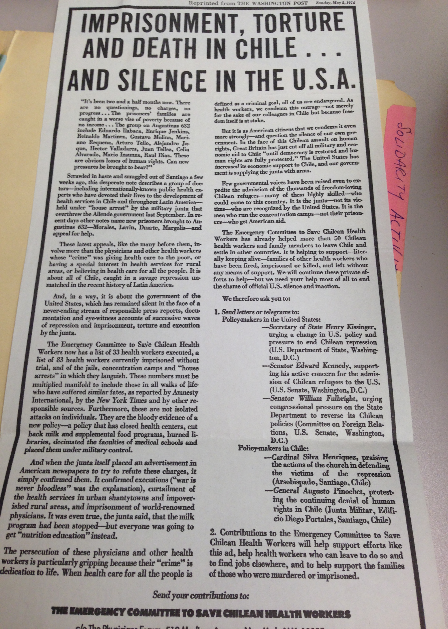
The other thing that I did after the coup was that I went to a very good friend’s house who lived across the street from the Military Hospital. And he took me to his sister’s house near the *National Stadium. They were right-wing, some CDs, but they were horrified. They lived on Avenida Iglesia, so they were just seeing truckloads of dead bodies that were piled in the back and covered only with a tarp.
My friends didn’t know what to make of it, I mean they were all for the coup, but then they started seeing these trucks at 5 or 6 o’clock in the morning. They were removing bodies from the National Stadium. It changed those people. And I kept hearing about different friends who’d been shot and detained.
Fran: One called and said the soldiers came and pushed the Cardinal, who was his neighbor, into a car and took him off.
Student: Some of the people who committed those crimes are now in government. They just want the people to forget.
Ana: Well, you can’t forget! We have two parts of Chile, those who favored the coup and think Pinochet was a hero, and those who had family members who were disappeared or tortured or killed. They’re still finding bones...
The Trip Out
We left on the first plane that left on the 19th of September. The only reason we got out was because we had friends give us their tickets. . . (To Be Continued in Part 2)
Lessons from Part 1:
I haven’t talked a lot about the History is Ours project or the Chilean coup very much in recent years. I attribute that in part to my own frustration over never having brought the stories to a wider audience. I also had the time to observe over the years, that many Americans, simply did not care to know more about it. They certainly didn’t care to reflect on the U.S.’s role in this horrendous event and what it could possibly mean about U.S. foreign policy and the many, still entrenched, neoliberal institutions that hold such unbalanced power today. It’s possible that I had been so shocked and overwhelmed by the information, shocked about the coup and the things that were done to uplift fascism, shocked of course about the US’s involvement, but also shocked by the entire Western colonial project, that I went into a rather prolonged state of freeze after absorbing these stories that didn’t serve anyone, least of all the people whose stories I still held. I tried to share the stories of course in 2014 when the booklet was published. At CUSLAR, we always thought we would return to the project, revisit the interviewees, and keep telling the many unheard stories of those in Chile during this critical time period. From 2015-2018 I would bring it up at new jobs as I tried to describe who I was to co-workers; I felt like I could not relate to people my age very well without first telling them about these interviews, the book, and what had been my primary focus for that last year and my biggest accomplishment so far. The research never felt over.
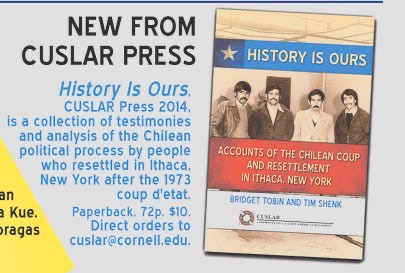
The layers behind this event would keep unfolding before me. I had to keep talking about it, always gauging what regular people knew about it, gauging their reactions when I told them about the coup, and gauging their reactions when they learned about the levels the U.S. was willing to go to in order to enforce its economic agenda on Chile, and anyone else that went against it. I eventually met other people interested in Chile through socialist activism in the U.S. I learned the story of my friend Alice Embree who had gone to Chile on the same trip as future Congressman Lloyd Doggett while they were both students at the University of Texas in 1967. She became a fierce antiwar activist with groups like the UT SDS chapter and the Austin Committee for Human Rights in Chile; she worked with *NACLA and, from then to today, has always spoken about Chile. Meeting Alice and her family made me feel like Chile always finds a way back into my life (more on that in Part Two).
Chile has long been described as a testing ground for the *Chicago Boys Economic project. The military junta regime was a Western colonial project, similar to Israel, similar to the United States itself. The project had to succeed because socialism needed to fail; whatever would uplift the people, whatever methods that would give them their land back or give them real economic power, had to fail.
Chile was to be the example.
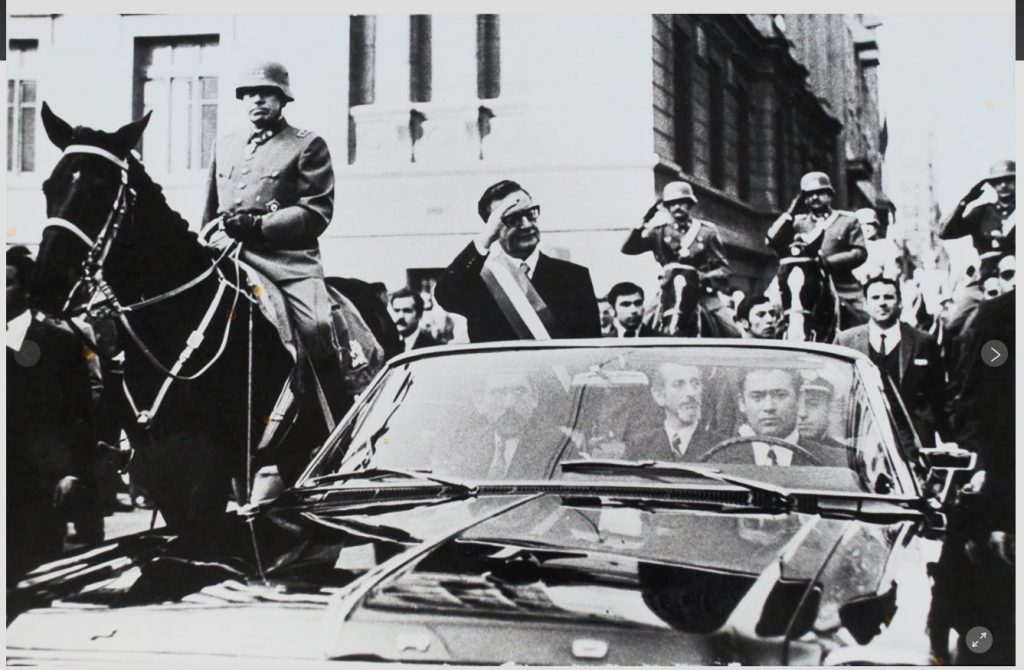
Ana’s story shows that not even the UN had protection from this kind of fascist takeover. As Allende said in his final speech over the airwaves on the morning of the 11th: “At this definitive moment, the last moment when I can address you, I wish you to take advantage of the lesson: foreign capital, imperialism, together with the reaction, created the climate in which Armed Forces broke their tradition, the tradition taught by General Schneider and reaffirmed by commander Araya, victims of the same social sector which will today be in their homes hoping with foreign assistance, to retake power to continue to defend their profits and their privileges”
“I am certain that the seed which we have planted in the good conscience of thousands and thousands of Chileans will not be shriveled forever. They have strength and will be able to dominate us, but social processes can be arrested neither by crime nor force. History is ours, and people make history.”
Allende understood that he had been betrayed by multiple figures and elements of the military, including “Mr. Mendoza, the despicable general who only yesterday pledged his fidelity and loyalty to the Government.”
Allende also understood that the military had the greater show of strength in this case. There is much debate on whether he should have done more, if he should have armed the workers, but my view, with Hindsight 20-20, after seeing the same pattern repeated successfully by the global elite in country after country; the people of Chile did not stand much of a chance against this fascist wave at that time. The people could not overpower a military leaders, many trained at the *School of the Americas, who were more brutal than any average person would have expected. The forces of foreign capital and imperialism were waging economic warfare against Chile from the moment Allende began his presidency and before. They sowed division between the classes with great intention and strategy. Ana’s experience even as part of an American elite family shows that human rights and international order would be discarded fully by the military regime and those who supported it. Does it show the weakness of the United Nations in protecting civilians? It’s unavoidable; yes. Whether it be a U.S.-backed coup in Chile, or a U.S.-sponsored genocide in Palestine, the UN seems unprepared to adequately respond and uphold international law when the violator is the United States or one of its close allies and proxies.
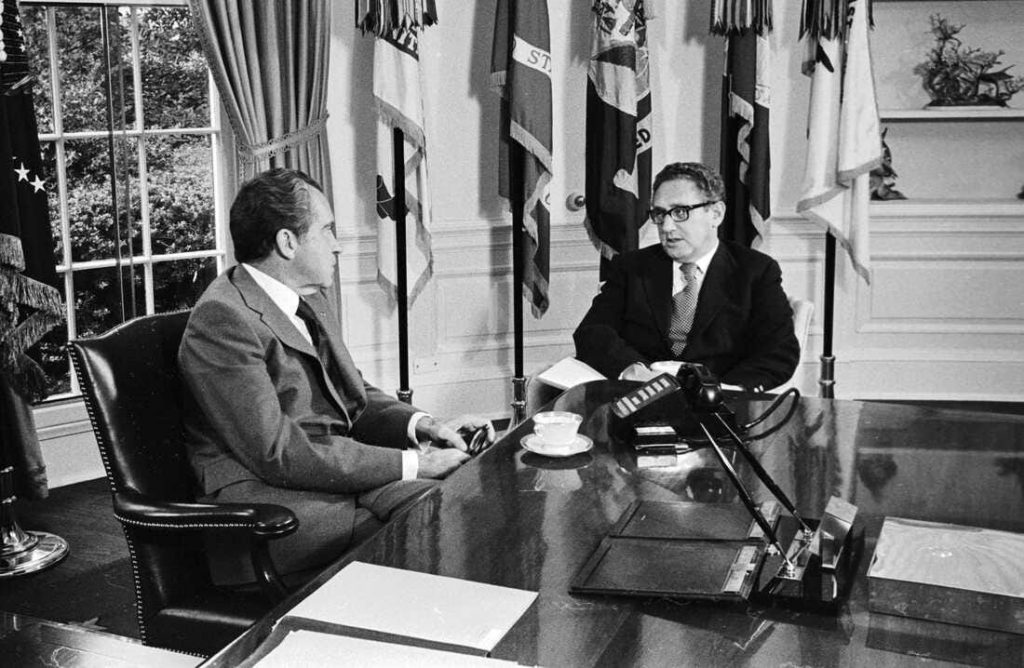
The biggest lesson to me that needs to be remembered today is simply understanding who the United States is. These are the questions I hope someone hearing this for the first time wants to ask: Why would the United States back a coup that killed agriculture officials? Why would they back a coup that threw people doing land reform in the river? Why would they back a coup where civilians were rounded up and taken to a soccer stadium to be tortured and killed, their bodies piled onto trucks with a loose tarp and then driven to a dumping ground? If you think this started with Donald J. Trump, you have a lot to catch up on. Fascism in the United States is not new. It is not modern.
Heed the last words of President Salvador Allende:“I wish you to take advantage of the lesson: foreign capital, imperialism, together with the reaction, created the climate in which Armed Forces broke their tradition.” Fascism will, and will not, creep up on you. There are signs, there are subtle ways the leaders may try to hide their fullest intentions temporarily, but a fascist’s true desire will always become apparent at a certain point, undeniably. Like the Nazi that showed up to a warehouse in Los Angeles to debate Mehdi Hasan for Jubilee, fascists will loudly proclaim their beliefs, they will laugh them off with no hesitation or second thought. Fascists, by definition, believe in power; they believe that corporate power, military power, should be the deciding factor to all government decisions. They are happy to be the axe that is wielded for that agenda. If they want to break their oaths to the Constitution, they will.
You will know when fascism is at your door. And it will be far too late then. What will you do when you know when they are down the street? What will you do when you know they are a few neighborhoods over? What will you do if they go first to a neighborhood that you don’t particularly like? Will you still know that it is fascism?
What will you do when you hear the stories of this coup, of what the U.S. was willing to do, of what the U.S. did, to cement its economic power over Chile, what the U.S. did to protect the international elites in the copper industry who were losing profits? Will you believe that capitalists are confident in their economic model? If in a democratic system, capitalism is always the logical choice of the people . . . why did they need the military to enforce that system? Why did they need to torture those who committed the ultimate “crime” to fascists: having their own thoughts? Believing in an alternative economic model? Joining a workers’ union, organizing as a student for a better world, supporting your neighbors, supporting land reform, speaking out against the military regime… all crimes. There comes a day when fascism is at your door, but before then, you must always organize for the power of the people, no matter who is elected, because the imperialists, the real criminals, are still at large.
Allende said “People make history.” He knew that it was the belief of the working people of Chile for a better future that put him into office in the first place. He knew that it was the power of the people (and his administration’s policies that were enacting real change for the people) that became such a threat to the global elite, they conspired to orchestrate such a violent, dissent-crushing coup. It was the threat of the people realizing their own power, through these policies, and through the broader socialist movement, that terrified them most of all.
Democratic Socialism and the nationalization of the copper industry, was the threat they needed to stop before the rest of the capitalist world could truly learn the lessons of the Allende government. The U.S. would support any government who promised to squash a movement led by the coalition of leftist organizations that backed Allende’s election, and the multi-pronged workers’ movement that gave those organizations their heart and soul. The U.S. could not allow Chile’s significant improvements regarding agrarian reform, healthcare reform, worker ownership, and nationalization of industries, to become worldwide success stories. They needed the world to believe privatization and capitalism were synomynous with democracy.
It was always a lie. It is still a lie. It was not socialism nor a democratic socialist government enacting land reform reforms that lead to a daughter of an American diplomat burning books to hide their friends’ names, to keep them from being targets of brutal torture and “interogation”… it was when a fascist coup occured, backed by her own government, the American government itself, that such actions were necessary. That occurs when democracy has been betrayed and U.S.-backed fascism has won. Even so, history IS ours. We, the people, make history. Democratic Socialism isn’t about a powerful leader coming to save you; it’s about the people -and only ever the people- saving themselves, no matter the time, no matter the obstacle. Foreign capital and the forces of imperialism will no longer divide us, and they will no longer defeat us.
For sources and footnotes, go to the Substack article here.